霸王别姬
GT Voice: Backlash against US export licensing shows futility of containing China_我的网站

A |
Trade File photo: VCG
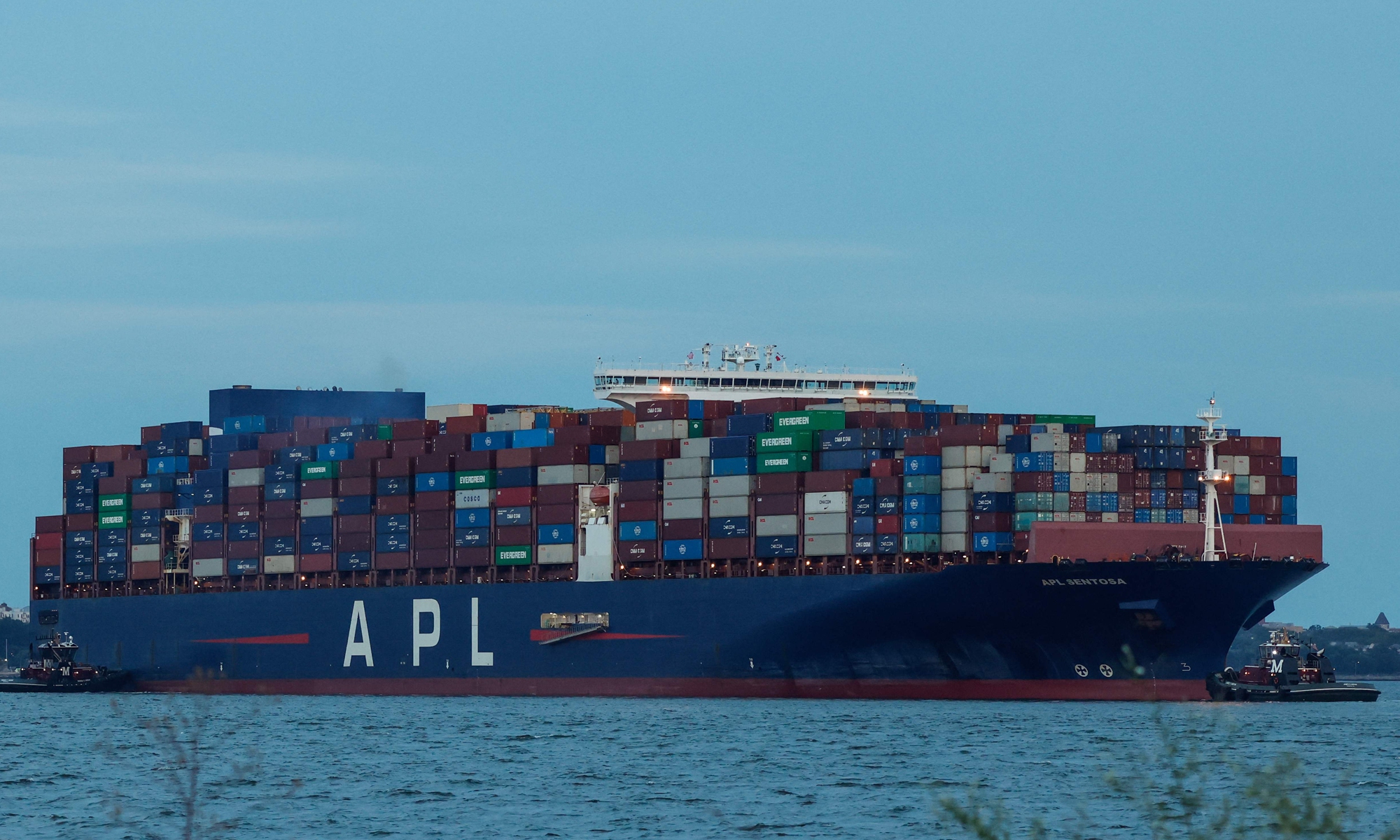
Months-long American export license delays are costing the US billions in exports and eroding American market share globally, the US-China Business Council (USCBC) said in a flash survey released on Tuesday.
The survey noted that poorly calibrated US export controls weaken American companies in China, ceding market share to foreign competitors while reducing the profits available for research and development (R&D).
Designed originally to safeguard national security and serve legitimate foreign policy interests, the US export licensing system has become increasingly politicized, gradually turning into a political tool that obstructs normal economic and trade exchanges. The USCBC survey serves as a stark reminder of how such overreach has backfired on American companies.
In recent years, US politicians have clung to the misplaced belief that restricting exports of advanced goods and core technologies would slow the upgrading of China's tech industry and secure America's technological supremacy. Yet, they overestimated their leverage, while grossly underestimating the developmental resilience that China has built over decades of growth.
Today's China is no longer a passive follower or technology importer. Instead, it has grown into a robust innovation powerhouse with complete industrial chains and strong endogenous driving forces in numerous key technological sectors. Rather than stifling China's technological progress, America's escalating containment measures have only forced China to accelerate industrial upgrading and supply chain optimization.
In the meantime, while US politicians have been indulging in the illusion of building a "tech wall" through licensing restrictions, the self-inflicted damage to the US has grown increasingly impossible to ignore. Reuters reported in August 2025 that thousands of license applications by US companies to export goods and technology around the globe, including to China, were in limbo because turmoil at the agency in charge of approving them had left it nearly paralyzed.
The USCBC survey also listed license delays as the most common challenge identified by 95 percent of companies. For items bound for Chinese customers, two-thirds of companies have had licenses pending for at least three months, exceeding the US Commerce Department's statutory requirements to process applications within 90 days, and 31 percent have had licenses pending for one to two years.
As a result, American tech companies can only watch helplessly as orders that once belonged to them flow to suppliers in other countries. These licensing delays not only impose administrative costs far exceeding expectations, but also severely disrupt normal cross‑border commerce. From semiconductor components to high‑end industrial materials, and from aerospace ancillary products to cutting‑edge research instruments, countless routine trade transactions have been artificially severed. The market advantages that US firms took years to forge is being eroded by the very policies meant to protect them.
From a deeper economic perspective, the export licensing system is particularly lethal to America's innovation ecosystem. Usually, companies allocate a significant portion of their revenue to R&D and technological innovation. However, if the products resulting from these investments cannot be sold in a major market, investment returns will be affected, and the incentive for companies to continue investing in innovation will be undermined. As underscored by the USCBC survey, the export licensing regime diminishes America's ability to innovate and undermines US economic security.
In trying to contain China's industrial rise, the US has ended up undermining its own interests, laying bare the fundamental divide between two development paths. On one hand, the US attempts to fragment global industrial chains through administrative intervention, trade barriers and technological "decoupling" to sustain its dominant position. Yet, such obstructive practices only undermine the competitiveness of domestic industries and weaken America's own innovative vitality.
On the other side, China adheres to high-standard opening-up and win-win cooperation. By continuously opening its vast domestic market and providing foreign companies with a stable business environment, China has built a mutually beneficial global industrial collaboration network. China understands that genuine competitiveness comes from sustained independent innovation, sophisticated industrial supporting systems and market vitality. Precisely because China has chosen to expand openness and deepen cooperation, it has demonstrated remarkable resilience in the face of external containment and constructed a globally integrated supply network.
。 Jonah Hill is taking a step back from interviews as he prepares to release his new film “Stutz,” in which he showcases the anxiety attacks he has experienced in the film industry—specifically, in having to promote his work.,The actor, whose film will make its debut this fall, wrote in an open letter to fans that he would be leaving the marketing aspect of the film industry: no more interviews, no more press tours, and no more public events. The reason? Hill’s year-long battle with crippling anxiety and panic attacks.,"I have finished directing my second film, a documentary about me and my therapist which explores mental health in general called Stutz. The whole purpose of making this film is to give therapy and the tools I've learned in therapy to a wide audience for private use through an entertaining film,” the actor wrote in his open letter.,"Through this journey of self-discovery within the film, I have come to the understanding that I have spent nearly 20 years experiencing anxiety attacks, which are exacerbated by media appearances and public-facing events.",ViralSources Confirm to TMZ That Angelina Jolie Was Behind FBI Lawsuit Against Brad Pitt16 August, 22:32 GMT,Hill, who was only 19 years old when first appeared on screen in “I Heart Huckabees,” says he hopes his new film will help those struggling with anxiety and mental health issues, but added that his fans would miss out on seeing the actor promote his new film as he is taking the “important step to protect” himself.,“If I made myself sicker by going out there and promoting it, I wouldn't be acting true to myself or to the film," the actor added. Hill also acknowledged the privilege he has in being able to take time off of work for his mental health, but says he hopes that being transparent about his anxiety will “make it normal for people to talk and act on this stuff.”,"I hope the work will speak for itself and I'm grateful to my collaborators, my business partners and to all reading this for your understanding and support,” Hill concluded.。
Current article:http://k0waga.shangyaohujunwei.bond/list_lr5pbv/og4.html
Published on:07:07:45


 意天空:土耳其球队有意国米小将卡马特,但球员不愿去土超踢球
 GT Voice: Backlash against US export licensing shows futility of containing China
 曾在恒大薪水上亿!40岁郜林吐槽:在中乙当老总1个月工资不够油费
 7月楼市韧性彰显 市场企稳基础进一步夯实
 含奔驰C级、S级和GLC等 北京奔驰召回部分进口和国产汽车
 杭城天气今日迎来转折 雨水“退居二线” 高温“补位上岗”